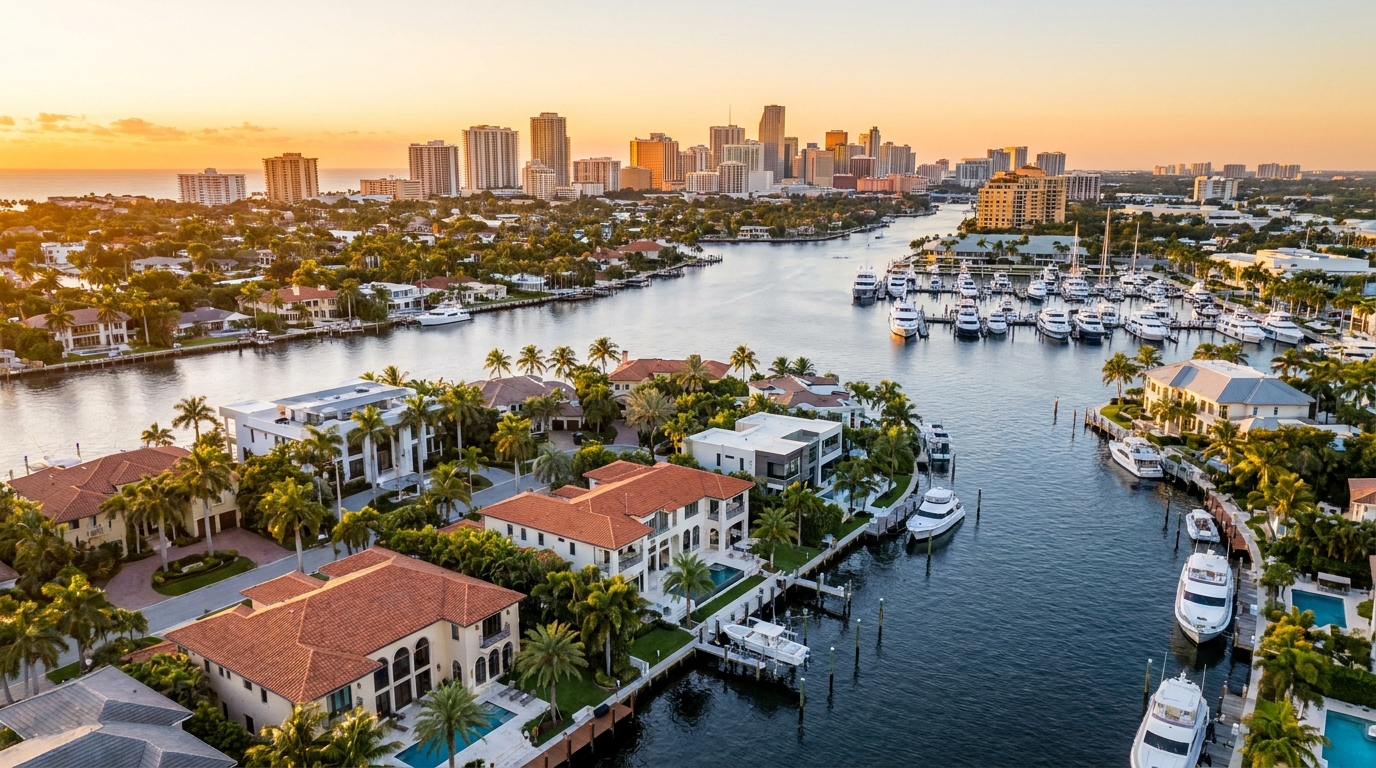
Broward County's October 2026 housing data tells a clear story: single-family homes remained relatively stable, while the condo market continued to soften. Single-family homes finished the month with 4.4 months of supply and a median sale price of $610,000, while condos reached 10.6 months of supply and a median price of $240,300.
That split matters because broad headlines can oversimplify what is actually happening on the ground. Broward is not moving as one unified market right now. Buyers and sellers are facing very different conditions depending on the property type, the neighborhood, and, in the condo segment, the building itself.
Here is what stands out in the October numbers and what it means if you are planning a move in Broward County.
Key Takeaways
Broward County's single-family and condo markets remain split, so market conditions depend heavily on the property type.
Single-family homes carried 4.4 months of supply in October 2026, while condos reached 10.6 months, giving buyers more leverage in that segment.
Single-family median prices were $610,000, nearly flat year over year, while condo median prices fell to $240,300, down 7.22%.
Homes moved faster and closer to asking price in the single-family segment, with condos taking longer and averaging a lower share of original list price.
Countywide figures provide useful context, but pricing and negotiation strategy still come down to the specific neighborhood, property, or building.
Broward County Housing Market Snapshot for October 2026
Before getting into what these numbers mean for buyers and sellers, here is the October 2026 data from MIAMI REALTORS® and RWorld. Looking at single-family homes and existing condos side by side gives a clearer picture of how differently these two segments are behaving.
Metric | Single-Family Homes | Existing Condos |
|---|---|---|
Closed Sales | 892 | 858 |
Year-over-Year Sales Change | -13.9% | -11.91% |
Median Sale Price | $610,000 | $240,300 |
Year-over-Year Price Change | -0.20% | -7.22% |
Active Listings | 4,467 | 9,814 |
Year-over-Year Inventory Change | -16.72% | -11.03% |
Months of Supply | 4.4 | 10.6 |
Median Days to Contract | 41 | 65 |
Median Days to Sale | 78 | 108 |
Original List Price Received | 96% | 92% |
Cash Share of Sales | 25.4% | 52.7% |
The contrast between those two columns is the central story in Broward County right now.
What the October Numbers Really Mean
Sales were down year over year in both categories, and on its own that can sound more concerning than it really is. The more important point is that inventory also declined, which points to a slower pace of transactions rather than a market losing its footing.
For single-family homes, 4.4 months of supply still indicates conditions that lean toward sellers. Homes went under contract in a median of 41 days, and sellers received 96% of original list price on average. That is a steady market, even if it is no longer moving at the pace buyers and sellers saw in earlier cycles.
Condos are behaving differently. With 10.6 months of supply, buyers have more leverage, more time, and more options. The median time to contract was 65 days, and sellers received 92% of original list price on average. That gap in both timing and pricing shows how much more important negotiation has become in the condo segment.
A few additional details help explain the divide. The 24-day difference in time to contract shows how much more selective condo buyers have become. The 52.7% cash share in condos also reflects how financing challenges, building condition, and insurance costs continue to shape demand in that segment. And with condo median prices down 7.22% year over year, buyers have more room to negotiate than they did a year ago.
Is Broward County a Buyer's Market or a Seller's Market?
The honest answer is that Broward County is both, depending on the segment.
Single-family homes still lean toward sellers. Inventory is tighter, prices have held relatively steady, and buyer demand remains consistent enough that well-priced homes in strong condition can still attract serious attention.
The condo market is different. With more than 9,800 active listings and 10.6 months of supply, buyers have more choice and more time to evaluate their options. Sellers who price without a clear read on competing inventory are likely to feel that shift quickly.
Even then, countywide numbers only go so far. Conditions in Coral Springs are not identical to conditions in Hollywood, and a well-maintained home in Pembroke Pines competes in a very different environment than a condo in a Fort Lauderdale building facing potential assessments. The county average provides context, but it is not a substitute for property-specific analysis.
What Buyers Should Pay Attention to Right Now
For buyers, the clearest opportunity right now is in the condo segment. More inventory, longer marketing times, and softer pricing create better conditions for negotiation than buyers had a year ago. That does not mean every listing is suddenly a value, but it does mean buyers can be more selective.
The bigger issue is looking beyond the purchase price. In Broward County, the true monthly cost of ownership often depends just as much on HOA fees, reserve funding, insurance, and building condition as it does on the mortgage payment. For condo buyers especially, reviewing milestone inspection information, reserve health, and signs of deferred maintenance is part of basic due diligence, not an extra step. I covered that more closely in this guide to condo buyer due diligence.
For single-family buyers, the strategy is different. Inventory is tighter, pricing has been more stable, and desirable homes can still move at a healthy pace. In that environment, recent comparable sales, neighborhood-level competition, and property condition matter more than broad county averages. Buyers who want to track what is actively available can review Broward area listings.
What Sellers Should Pay Attention to Right Now
For sellers, pricing discipline matters more now than it did in a faster-moving market. Buyers have more information, more comparison points, and less urgency than they did a few years ago. When a property comes to market priced ahead of reality, it is more likely to lose leverage before it gains momentum.
Single-family sellers are still operating in relatively favorable conditions, but that advantage only holds when the home is positioned correctly. The most useful benchmarks remain recent closed sales, current competing listings, and the overall presentation of the property. Buyers still respond to quality and value, but they are less willing to overlook a mismatch between the two.
Condo sellers face a more competitive environment. With 10.6 months of supply, buyers have options and more negotiating power. That makes realistic pricing, strong preparation, and a clear understanding of competing inventory especially important. Sellers looking for a more property-specific benchmark can start with a home valuation request or review my approach to selling in South Florida.
Why Local Context Matters More Than Countywide Averages
Countywide data is useful, but only to a point. A median sale price can help frame the market, yet it tells you very little about what a specific home in a specific neighborhood is likely to command.
A $610,000 median for Broward single-family homes does not tell you how a three-bedroom home in Margate compares with a waterfront property in Fort Lauderdale, or how inventory in Coconut Creek differs from what buyers are seeing in Hollywood. The same is true in the condo market, where building condition, reserves, insurance pressures, and inspection history can create very different outcomes from one property to the next. A condo with strong financials and a recent milestone inspection is simply not competing on the same terms as one with deferred maintenance or financial uncertainty.
That is why local context matters more than a headline number. Neighborhood-level supply, building quality, and property-specific competition are what turn market data into useful strategy. Readers who want a more localized view can explore South Florida communities.
Financing, Carrying Costs, and Buyer Behavior
Rates remained elevated throughout October. Freddie Mac's weekly survey showed 30-year fixed rates ranging from 7.28% to 7.40% for most of the month before ending near 7.24%. That continues to put pressure on affordability for financed buyers.
In South Florida, the mortgage rate is only one part of the cost picture. Property taxes, insurance premiums, HOA fees, and maintenance expenses can all materially change what a home costs to own each month.
That broader cost structure is shaping buyer behavior across both segments. It helps explain why cash buyers remain so active and why financed buyers are taking more time before committing.
Conclusion
October 2026 reinforced how divided the Broward County market remains. Single-family homes stayed relatively stable and seller-leaning, while condos continued to offer buyers more negotiating room, more time, and more choice.
That is the clearest takeaway from this report. Countywide numbers are useful context, but real strategy still comes down to the neighborhood, the property, and the competition surrounding it.
Frequently Asked Questions
Why do Broward County market reports sometimes show different numbers?
Different reports can use different MLS coverage areas, property-type definitions, or data cutoff dates. The most reliable comparisons come from looking at the same property category, the same source, and the same time period.
How often are Broward County housing statistics updated?
Official monthly statistics are typically released after the close of each prior month through organizations like MIAMI REALTORS® and Florida Realtors.
Are cash buyers still active in Broward County?
Yes. Cash accounted for 25.4% of single-family sales and 52.7% of condo closings in October 2026, making cash a significant factor, especially in the condo segment.
Can countywide median price data tell me what my home is worth?
No. A median is useful for understanding broad trends, but your home's value depends on its specific location, condition, size, upgrades, and what's actively competing around it right now.
Talk With The Jacques Team
If you want help applying these Broward County market conditions to your own plans, The Jacques Team is happy to help. Whether you are weighing a sale, comparing neighborhoods, or trying to understand how a specific property fits the current market, you can reach out through my website, call (561) 678-5584, or email [email protected].
Sources
MIAMI REALTORS® and RWorld, Broward County October 2026 Market Statistics (released November 16, 2026)
Freddie Mac Primary Mortgage Market Survey, October 2026
Check out this article next